
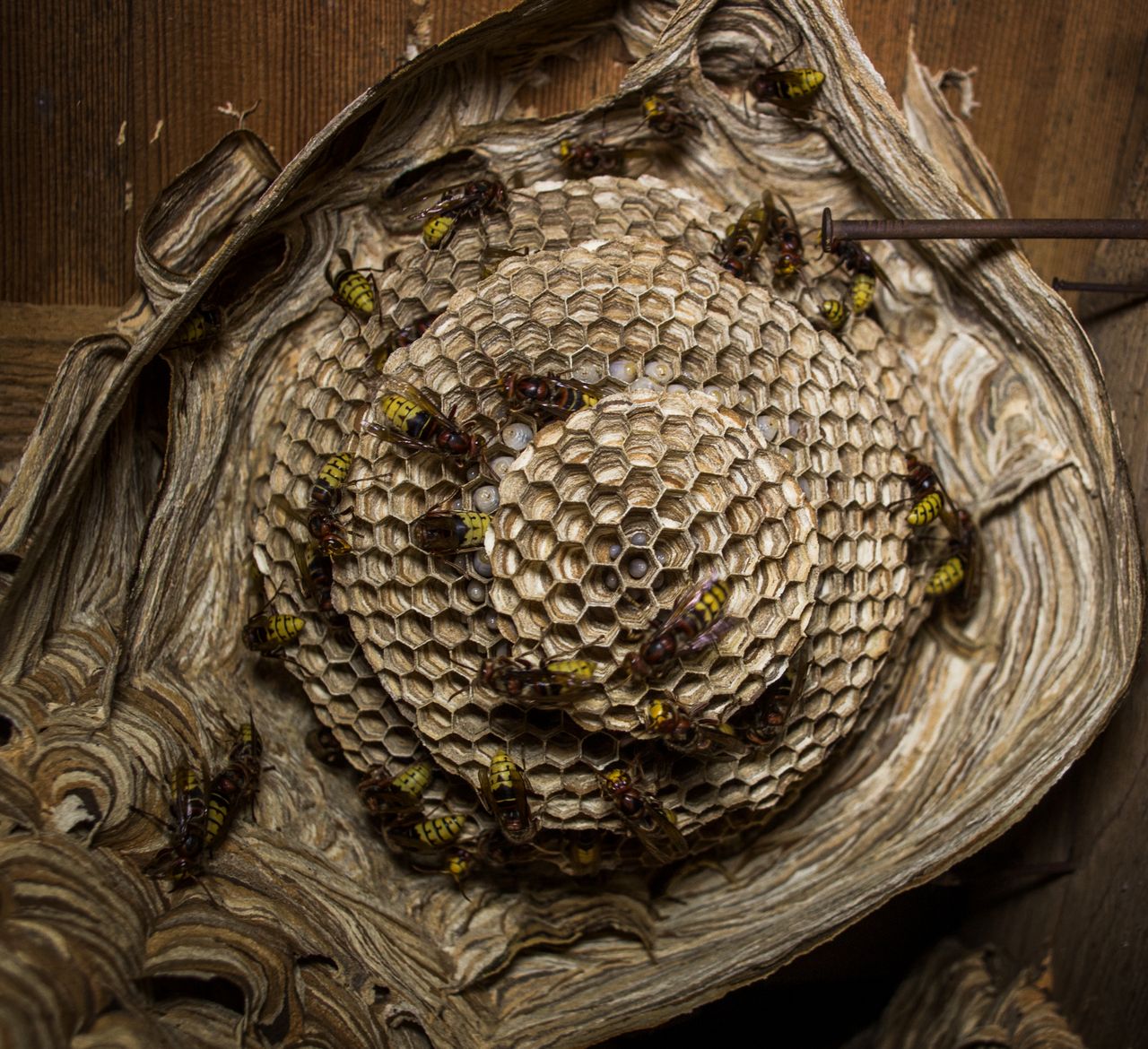
Wasp nests can be a serious issue for many homes and businesses throughout the UK, but it can be difficult to know when and how to remove them.
Wasps have a complex life cycle, and only use their nests for one season, so you may find that you have several empty nests on your property, as well as active wasp nests.
As an experienced provider of wasp nest removal for homes and businesses across Newbury, Basingstoke, Reading, Portsmouth, Woking, and throughout the South East, Countrywide Pest Control understands the best time of year to remove wasp nests safely.
While it is technically possible to remove a wasp nest throughout the year, there are various factors to consider, which we’ll outline in this comprehensive guide.
Can You Leave A Wasp Nest Alone?
Wasps are pollinators, and they also eat aphids, caterpillars and other insects, making them a natural form of pest control.
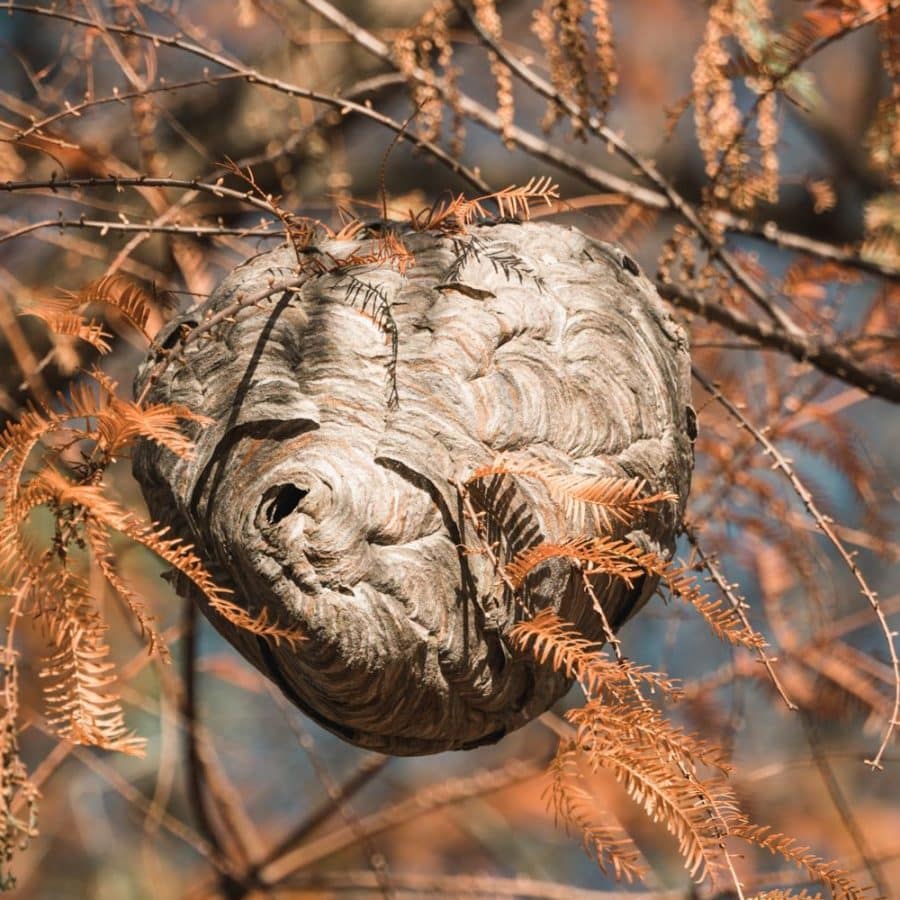
As such, if the wasp nest is out of the way, in a high tree or an unused outbuilding, then it can safely be left alone.
Additionally, many wasp species found in the UK are solitary wasps, meaning they live alone for most of their lives. These wasps build nests underground, usually in abandoned rodent burrows, so they are not a threat to humans.
The issues are caused by social wasp species, which include some of the most prevalent wasp species found in the UK, such as the common wasp, German wasp and European hornets.
These wasps live in large colonies, and build nests from chewed wood pulp mixed with wasp saliva. These nests can grow from the size of a golf ball to a basketball or even larger, and can contain hundreds of wasps.
If a social wasp nest is built in an area that is heavily used, or is deep inside a structure, such as a chimney or wall cavity, then it’s important that it is removed.
What Issues Are Caused By Wasp Nests?
While wasp nests that are built out of the way can be safely left alone, many wasp nests are build on or near homes and commercial premises, which can cause health and safety issues. Some problems caused by wasp colonies and exposed nests include:
- Stings: Unlike bees, wasps can sting as many times as they need to throughout their lives without dying. Even a single sting could cause serious issues if you’re allergic to wasps, leading to anaphylactic shock. For those who aren’t allergic to wasps, issues such as skin irritation and potential infections can occur.
- Food Contamination: Wasps flying around near food preparation areas or onto food can spread bacteria and germs.
- Structural Damage: Because wasps nests are made from chewed wood pulp, they may strip wooden beams, eaves and other structural features, which can cause damage to them. Also, wasp nests can cause mould and damp beneath the nest if it’s against a wall.
- Potential Fire Hazards: Being made from paper-like material, wasp nests are highly flammable, and if built near electrical wiring or a heat source, such as outdoor lighting, they have the potential to catch fire.
- Distress: If a wasp nest is built on a commercial premises, or near a family home, it can cause significant distress and irritation when wasps swarm around near humans, so safe wasp nest removal is important.
When Is The Best Time Of Year To Remove Wasp Nests?
While is it possible to remove a wasp nest at any time of the year, the best time is early spring. That’s because early spring is when wasp season starts, meaning you will be dealing with smaller nests.
By early summer, wasp colonies will have grown significantly, and the nest will be larger and more difficult to remove.
In early autumn, the colony dies and the new queens hibernate. Wasps don’t use their old nests again, but when the new queens wake up, they may build a new nest nearby.
So, removing a wasp nest in autumn can mean that you don’t find the new queen, so you may face a new nest in the spring.
Is It Safe To Remove A Wasp Nest In Winter?
It is perfectly safe to remove a wasp nest in the winter months, as the colony will be gone and the nest empty.
Like in the autumn, the issue is that the new queen may build her new nest in the same area, so you may find yourself facing new colonies in the spring.
By removing wasp nests in spring, when they are new, you improve your chances of getting rid of the entire wasp infestation.
What Is The Best Way To Remove A Wasp Nest Safely?
The best way to get rid of a wasp nest is to book professional removal from experts like the team at Countrywide.
Our pest controllers have extensive experience carrying out wasp nest removal, and have the skills needed to work at heights or carry out minor building work to access concealed nests built inside wall voids, loft spaces, air bricks and other tight spaces.
Being RSPH level 2 certified, our staff have access to wasp control products that aren’t available to the general public, as well as full protective equipment to keep themselves safe from wasp stings. They also have experience removing larger nests and dealing with infestations at all wasp lifecycle stages, ensuring the nest and all the wasps are removed safely.
Alongside wasp nest removal, we can provide professional treatment for a wide range of pests, including rats, mice, squirrels, ants, cockroaches, fleas, bed bugs, and birds.
If you’re dealing with a wasp nest on your property, get in touch on 0800 078 7255 to book fast treatment.